Luxury Wedding Flower Trends 2026 Costa del Sol | Altamirano Floristas

Every January, the same articles appear on wedding blogs across Europe. Ten floral trends for the coming year, illustrated with Dutch-grown peonies, Pinterest-polished tablescapes, and palettes designed with a Nordic bride in mind.
This article is not that.
At Altamirano Floristas, we design florals for weddings at Palacio Monte Miramar, Finca La Concepción, Trocadero Arena, Oyana Beach Club, and intimate cortijo celebrations across Málaga province. What we see in our consultation studio — and what couples flying in from London, Dublin, and New York are actually requesting — tells a very different story.
Here is what is shaping luxury wedding flowers on the Costa del Sol in 2026.
The Andalusian Palette: What Mediterranean Light Does to Colour
The most significant shift we are seeing this season is a decisive move away from the cool, desaturated palettes — dusty blush, silver sage, pale greige — that dominated destination weddings for much of the past decade.
In their place: warmth.
Terracotta is the dominant accent of 2026 on the Costa del Sol. Not the burnt terracotta of a farmhouse kitchen, but the refined ochre of sun-warmed limestone — the exact tone of the walls at Málaga’s historic venues, the Alcazaba, the private fincas around Ronda. Paired with ivory roses and textured greenery, this palette photographs extraordinarily well in Mediterranean afternoon light.
Olive green is replacing the cool eucalyptus arrangements that defined much of the previous decade. Locally sourced olive branches, rosemary stems, and the silver-green of Mediterranean herbs bring a sense of place that no imported foliage can replicate. These plants grow five minutes from the venue.
Broken white — not pure white, but the off-white of cream roses, dried pampas, and bleached botanicals — reads as more textured and intentional than pristine white in high-contrast outdoor settings. Against the terracotta walls of a Marbella cortijo, this combination is quietly spectacular.
What unites these three tones is their relationship with Andalusian architecture and natural light. They feel of this place, not imported into it.
Seasonal Flowers Actually Available in Spain
One of the most common mistakes couples make when planning a destination wedding here is building a mood board around flowers that are technically possible — meaning they can be flown in from Holland at significant cost — rather than flowers that are genuinely exceptional when sourced locally.
The difference in quality, fragrance, and longevity is considerable.
Spring weddings (March to May) are blessed with the most abundant local availability. Ranunculus in cream, peach, and deep burgundy are at their absolute peak. Garden roses begin their first flush — we work with growers in the Axarquía region who supply outstanding David Austin varieties. Wisteria, if your venue has it, makes for unforgettable ceremony backdrops. Spanish peonies, though their season is brief, are a revelation compared to air-freighted versions.
Summer weddings (June to September) require a different approach — and the Costa del Sol grows flowers that excel in heat. Agapanthus in deep blue-violet is practically endemic here and photographs beautifully against whitewashed walls. Bougainvillea, used not as a pot plant but as cut stems in loose arrangements, creates a distinctly Andalusian atmosphere that is impossible to replicate with imported flowers. Lisianthus is an outstanding heat-tolerant alternative to roses. We also incorporate artichoke heads, fig branches, and lavender — not as novelties, but as elegant structural elements.
Autumn and winter weddings (October to February) on the Costa del Sol are an increasingly popular choice, and the florals available are spectacular. Dahlias in café au lait and deep burgundy. Anemones in jewel tones against pale foliage. The clean architectural interest of bare olive branches. Persimmon and quince for seasonal texture that no florist in northern Europe can offer.
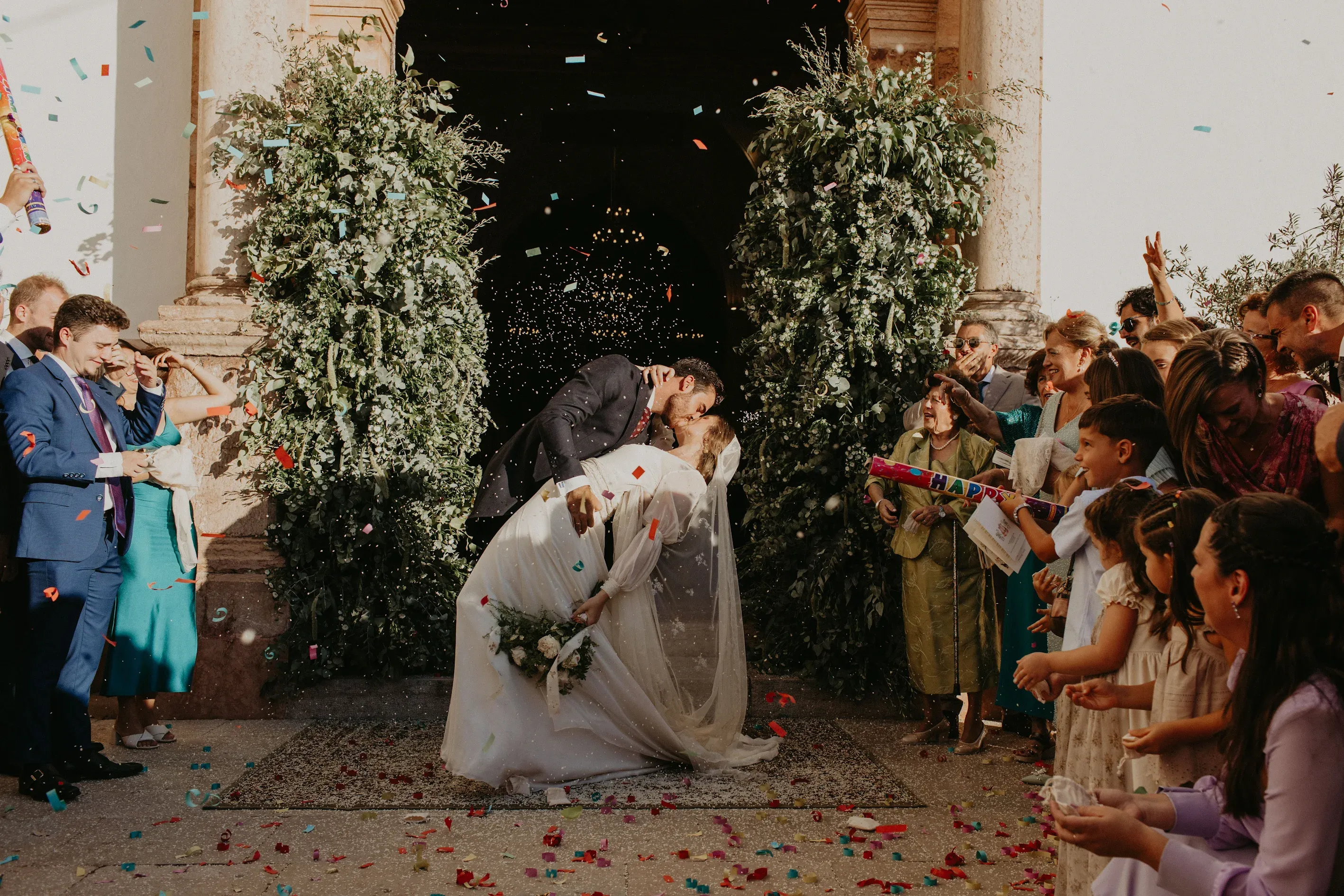
Diseño realizado por nuestro equipo en Cortijo Las Mozas, Málaga — agosto 2025.
Sculptural Installations vs Classic Centrepieces
The centrepiece as a category is not disappearing. But it is evolving — and the direction is architectural.
For several seasons, we have been seeing a clear appetite for floral design that reads more like sculpture than decoration. Where the classic centrepiece sits on the table and frames the conversation, the sculptural installation becomes part of the venue’s architecture, interacting with the space at a different scale.
In practice, this means suspended ceiling installations of trailing foliage and dried botanicals. Ceremony structures that do not look like standard arches — asymmetric frames that respond to the geometry of the venue rather than defaulting to a portal arch. Long table runners that incorporate varying heights, using candelabras and mixed vessel sizes to create movement across the table rather than a single focal point.
There is also a strong move toward incorporating non-floral elements. Dried palm fronds, bleached grasses, stone-coloured ceramics, and brass or bronze vessels. The flowers become one element in a broader design rather than the sole medium — and the result feels considered rather than accumulated.
This approach requires considerably more planning than a traditional centrepiece brief. The installation decisions interact with the venue’s lighting plan, the ceiling height, the flow of guests through the space. For this reason, we encourage couples planning sculptural elements to begin the conversation as early as possible — ideally twelve to eighteen months before the wedding.
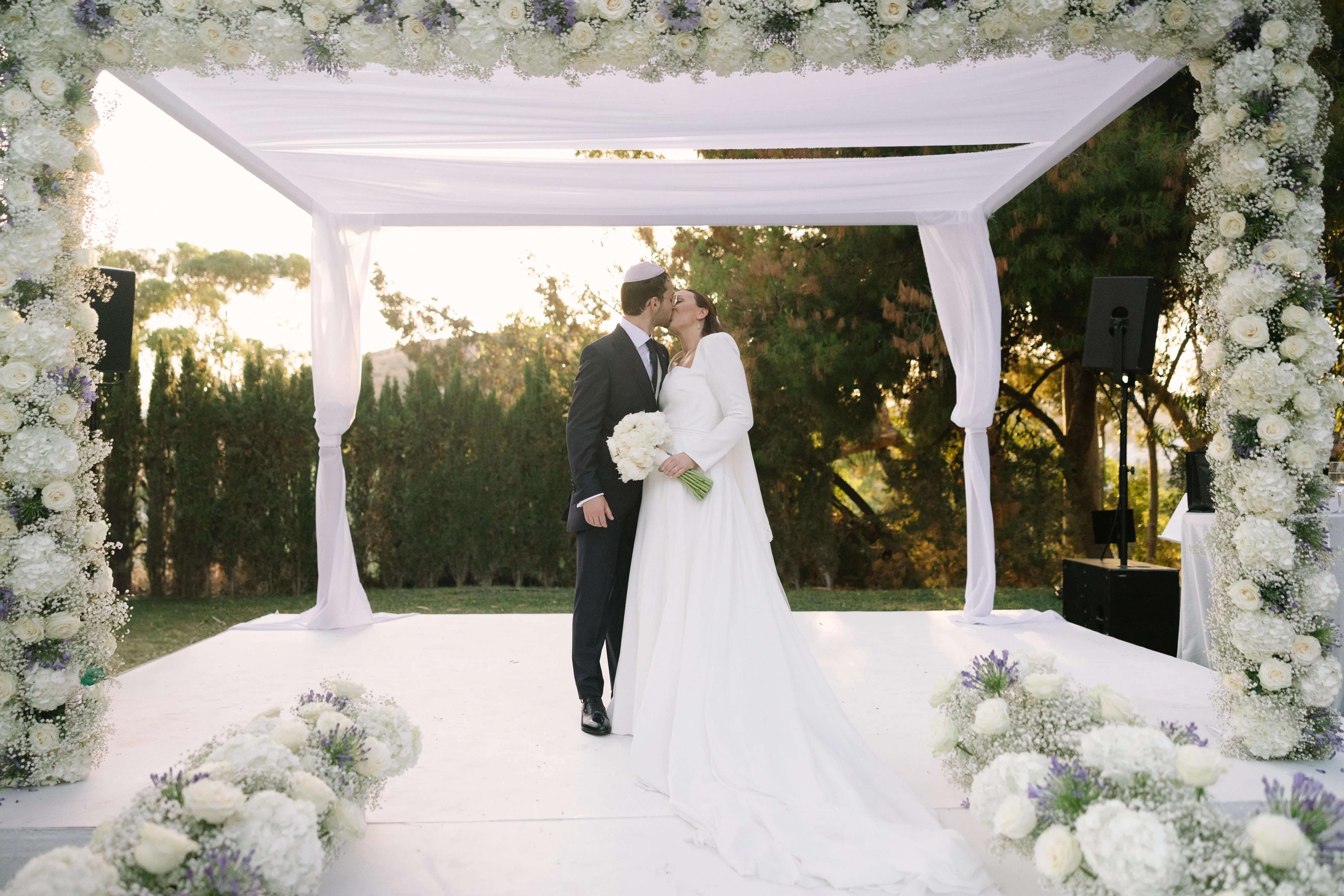
Diseño realizado por nuestro equipo en Palacio Monte Miramar, Málaga — julio 2025.
Local and Sustainable Sourcing: From Request to Standard
Three years ago, couples occasionally asked about the provenance of their flowers. In 2026, it is among the most consistent topics in our initial consultations.
We want to be transparent about what local sourcing means in practice for a luxury wedding on the Costa del Sol.
The majority of flowers available at the quality level required for high-end wedding design still travel through the Dutch auction system — Aalsmeer is genuinely one of the world’s great horticultural achievements, and many of the varieties couples love most are grown in Colombia, Kenya, and the Netherlands. For roses, lisianthus, and other varieties that need to be consistent in volume and quality, we work with trusted suppliers in Holland.
However, we source an increasing proportion locally. Spanish growers in Málaga, Granada, and Almería supply us with seasonal botanicals and specialty stems. For greenery — olive branches, rosemary, eucalyptus, Mediterranean grasses — local sourcing is now the default, not the exception. We also source seasonal fruit branches, herbs, and structural elements directly from fincas and producers in Andalucía.
The result is mixed provenance that prioritises quality and seasonality while meaningfully reducing the environmental footprint of the event. For couples who want to go further, we can build arrangements that maximise local content — working almost entirely with what Andalucía provides in the season of their celebration.
What Couples Are Booking Right Now
Based on consultations carried out in late 2025 and the opening months of 2026, these are the briefs we are receiving most frequently.
“We want it to feel Andalusian, not generically Mediterranean.” The distinction matters. Couples who have done their research want florals that reference olive groves, cortijos, and the Moorish architecture of the region — not a vague Mediterranean aesthetic that could be Santorini or the Amalfi Coast.
“Terracotta, cream, and deep green — but elevated.” The palette is remarkably consistent across briefs this season. Couples arrive with mood boards they have refined over months, and they want execution that matches the quality of their venue.
“No standard arch.” This request appears in almost every consultation for ceremony florals. Couples want asymmetry, drama, and structures that feel designed rather than selected from a catalogue.
“Can we use local flowers?” The sustainability question has become a standard part of the brief. Couples want to understand what we source locally, why, and where the supply chain is more complex. Transparency is expected.
“Abundant, but not overdone.” The maximalist aesthetic of recent years has softened into something more considered. Couples want visual impact alongside intentionality — each stem placed for a reason.

Diseño realizado por nuestro equipo en Trocadero Arena, Marbella — julio 2025.
Planning Your 2026 Wedding Flowers on the Costa del Sol
If you are planning a luxury wedding on the Costa del Sol and would like to discuss the floral design, the earlier we speak, the better. For peak season dates — particularly June through September — our availability is limited, and the most rewarding conversations begin a year or more in advance.
We offer a complimentary initial consultation for couples whose wedding date and venue align with our calendar. Bring your mood board, your questions about what genuinely grows here, and any firm ideas about what you do not want.
Get in touch to discuss your wedding flowers →
About the Author
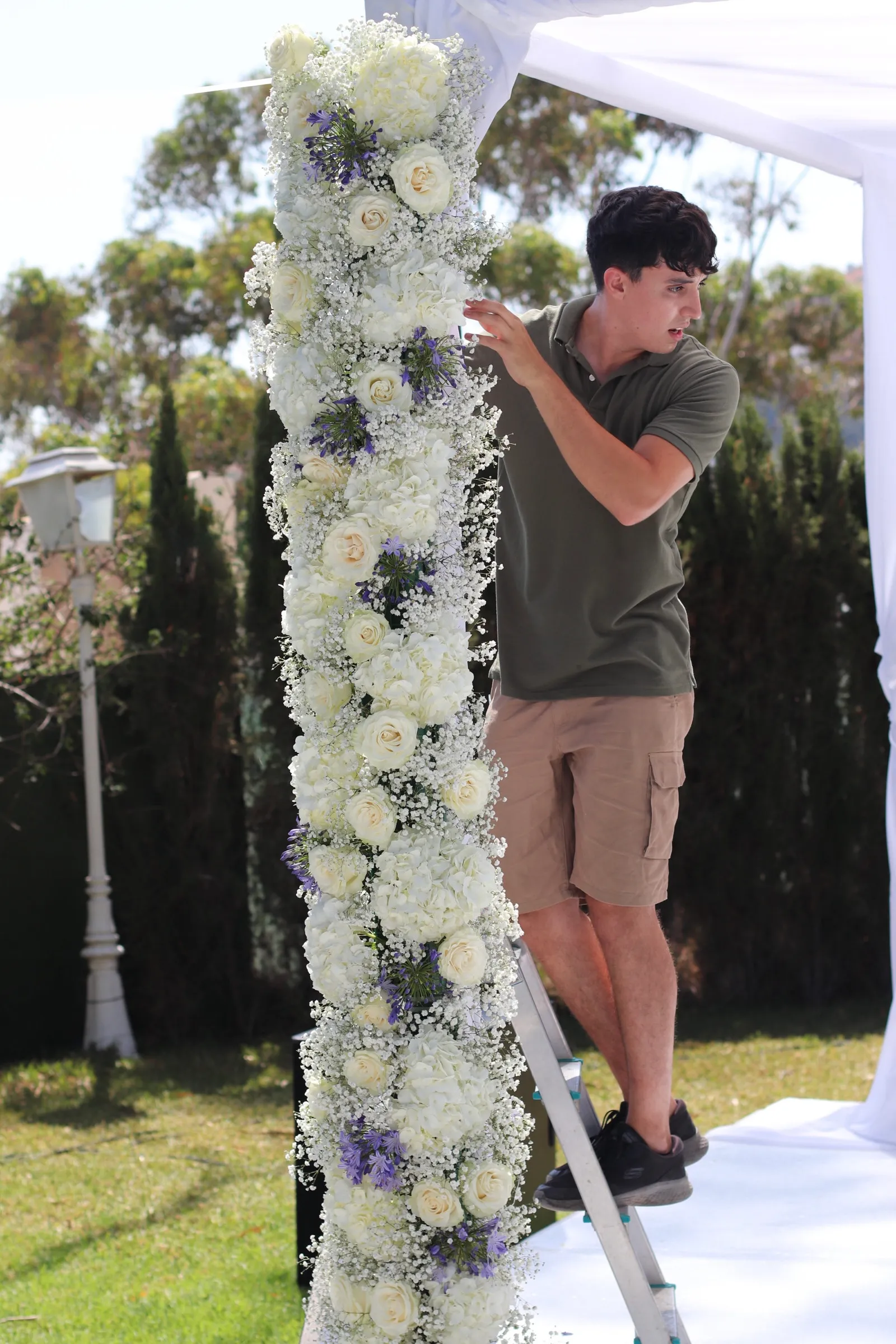
Luis Altamirano — Creative Director, Altamirano Floristas
Luis is the creative director of Altamirano Floristas, the studio founded by his father José Altamirano, a luxury floral design studio based in Marbella with over two decades of experience designing weddings and events across the Costa del Sol. His work is grounded in an intimate knowledge of what Andalucía grows, how Mediterranean light behaves across the seasons, and how floral design can respond to — rather than simply decorate — the architecture of the region’s finest venues. Recent projects include commissions at Palacio Monte Miramar, Trocadero Arena Marbella, Finca La Concepción, Oyana Beach Club, and private fincas throughout Málaga province.